Activity and Movement Within the Annual Cycle
The yearly cycle of bears can be divided into four physiological phases: winter dormancy (a resting period), hypophagia (reduced food intake), normal activity, and hyperphagia (increased food intake).
During winter dormancy, assuming continuous hibernation, bears show almost no activity to 5% activity related to the use of so-called “sunbeds.”
During winter sleep, bears significantly reduce their energy consumption, and their heart rate can drop to around 17 beats per minute. Despite this reduced physiological state, a bear is able to wake up very quickly and can become fully alert within a minute if disturbed.
As winter dormancy approaches, bear activity declines noticeably, with a significant decrease occurring roughly two weeks before entering dens. During this time, movement can drop by about 40%.
In early spring, when bears begin searching for the first available food sources, they often travel longer distances, such as moving from higher elevations down into valleys.
From the period of normal activity through hyperphagia (May to November), female bears have been observed to travel an average of about 4 km per day, with maximum daily distances reaching up to 20 km. Females with cubs tend to move less, averaging around 2,5 km per day.
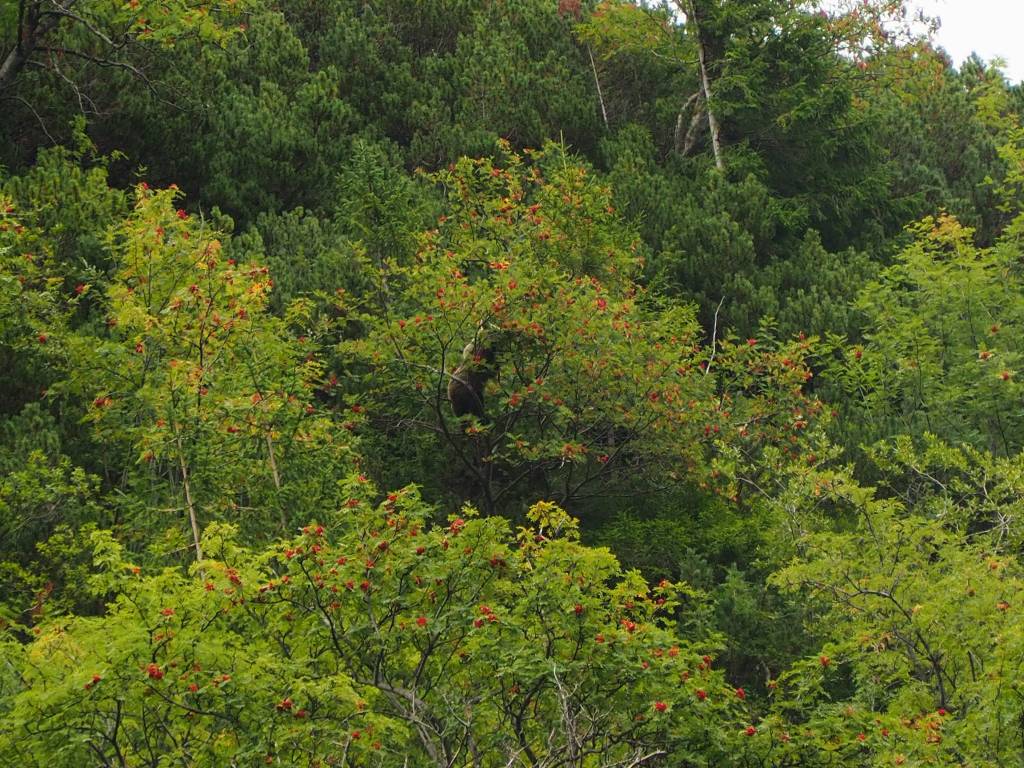
During hyperphagia, when accumulating fat reserves for winter is essential, both activity and movement depend largely on food availability. They may travel greater distances when seeking out other food sources, including nuts, acorns, or agricultural crops.
 Bear Watching Slovakia